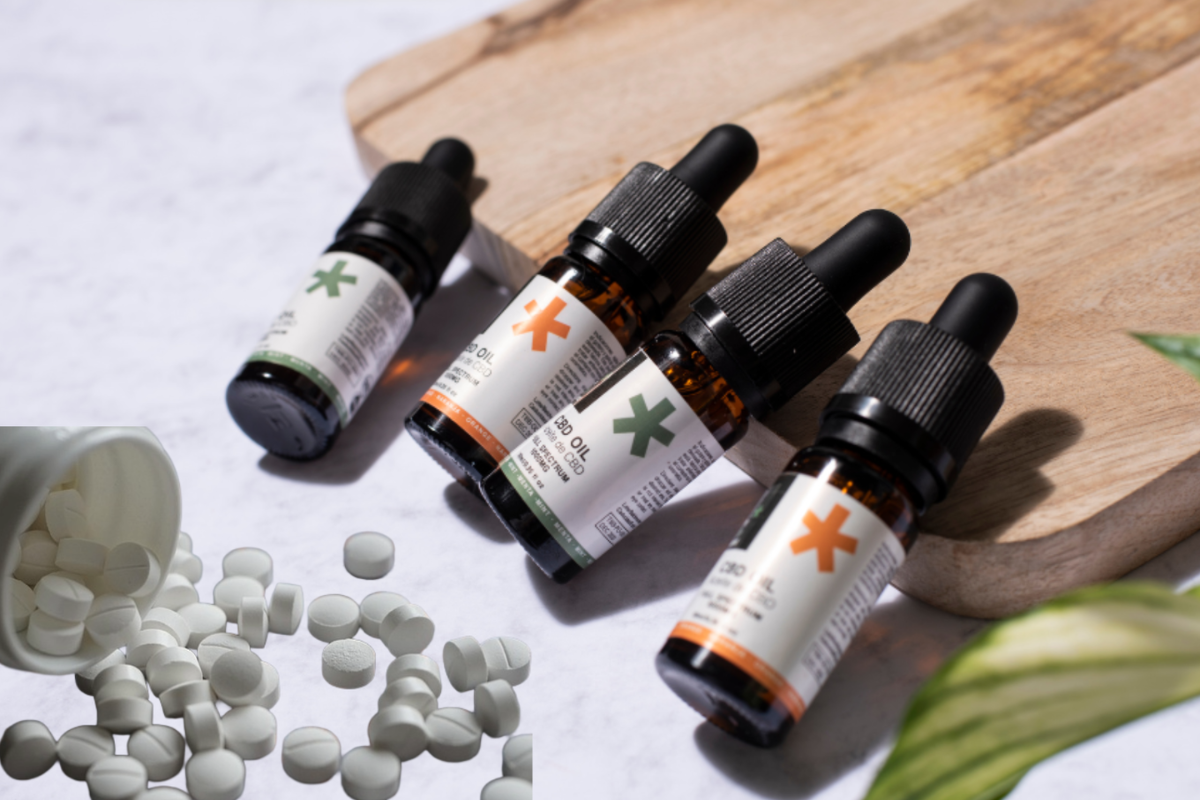
CBD (cannabidiol) has become a popular wellness product, but if you take prescription or over-the-counter medications, you must consider CBD and Drug interactions.
That doesn’t mean you can’t use CBD. It does mean that understanding possible interactions—and talking with your healthcare provider—is a good idea before adding CBD to your routine.
How Can CBD Affect Medications?
Our bodies rely on enzymes to break down many of the substances we consume, including medications. CBD can affect some of these enzymes, particularly a group of liver enzymes known as the cytochrome P450 (CYP450) enzymes.
When CBD changes how these enzymes work, some medications break down more slowly or differently than expected. This could cause the amount of medication in your bloodstream to increase or decrease.
This is one reason CBD shouldn’t automatically be treated as harmless simply because it comes from a plant.
What Types of Medications May Interact With CBD?
CBD has the potential to interact with a variety of medications. These may include:
Blood thinners
Some seizure medications
Antidepressants
Sedatives
Certain heart medications
Immunosuppressant medications
This isn’t a complete list, and interactions can vary from one person to another.
Age, overall health, liver function, CBD dosage, medications, or the CBD product may influence how the body responds.
Watch for Unexpected Changes
Possible signs of an interaction can include increased drowsiness, dizziness, digestive problems, changes in mood or changes in how well your medication appears to be working.
If something feels different after adding CBD to your routine, don’t simply assume it is the CBD “working.” It may be worth discussing the change with your doctor or pharmacist.
Talk to Your Healthcare Provider about CBD and Drug Interactions
If taking medication, one of the safest things you can do is let your healthcare provider know that you use—or are planning to use —CBD.
Bring a list of your medications, supplements and the CBD product you are considering. Your doctor or pharmacist can help determine whether there are known concerns or whether more monitoring is required.
Don’t stop taking or change the dosage of prescribed medication to use CBD without first discussing it with your healthcare provider.
Final Thoughts
CBD may be a useful addition to some people’s wellness routines, but natural doesn’t always mean interaction-free.
Learning about CBD and drug interactions, paying attention to how your body responds, and keeping your healthcare provider informed can help you make better decisions about whether CBD is appropriate for you.
Follow us: